Latest from Brussels

A Revolution in Europe’s Public Plate? The future of food policy is delicious

What would you do with €2.5 trillion? This is the amount the EU spends every year on public procurement. With the rules that shape this spending up for revision, there is a multi-trillion euro opportunity to serve better food in schools, hospitals, prisons and care homes – while simultaneously supporting farmers and nourishing local economies. Ashley Parsons reports. […]

Latest from key partners

What’s Food Sovereignty got to do with it? The New Geopolitics of Food

Resilient, self-reliant food systems. This is what a major new IPES-Food report puts forward as a way to deal with food price volatility driven by increasing geopolitical tensions. We recognise here many of the ingredients for Rural Resilience that we have identified in our project, including fair livelihoods for farmers and access to food for all. It’s a new and very ‘now’ pathway for governments to advance a food sovereignty approach. Oliver Moore digs in. […]

Latest from EU Member States

Hungry for Democracy? Here’s a flavour of France’s local solutions for food sovereignty

If the French municipal elections this spring taught us anything, it’s that what’s on our plates is most certainly political. Food is about much more than farming. In rural areas especially, food directly impacts health, landscapes, and quality of life, and it was a topic on doorsteps all over France during the recent campaign. Right now a political window of opportunity is open: for communities to take the power back over their food systems. Pauline Petit reports. […]

Latest from EU Member States

Who milks the cows when farmers fall sick? 

Who milks the cows when the farmers fall sick? There is only one answer to that question for most: the farmers, or their families. But it is a very different story in two European countries—and while right now, access to sick leave and holidays is determined by postcode, this could soon start to change. Here, ARC2020’s Natasha Foote digs into how these farm relief services work in practice and what the ingredients for success look like for other countries that want to set up similar services for their farmers. […]

Latest from EU Member States

Agroecology has a PR problem. Here’s how we can solve it.

How accessible are conversations around transition? Good Food For All! – a European Citizens’ Initiative carried by a coalition of over 300+ civil society organisations across Europe, including ARC2020 – is taking important strides to help make the messages of the food sovereignty and agroecology movements heard. But the battle for hearts, minds and policies is far from won. In this op-ed, Robbie Blake of IPES-Food asks how these movements can tell better stories. […]

Latest from EU Member States

Germany | Minding our Mental Health – “Take a closer look when others stumble”

Minding mental health is an ever increasing challenge for rural communities, and especially farmers. It’s a crisis exacerbated by precarious and political uncertainty, and tied up with questions of generational renewal on farms. To learn more about the situation on the ground, the services available, and what rural communities can do, Hannes Lorenzen spoke to Regina Eichinger-Schönberger, a health counsellor in Germany who specialises in suicide prevention in the green sector.  […]

Latest from key partners

Rural Resilience Gathering | Knowledge is the Power to Shape our Rural Futures Together

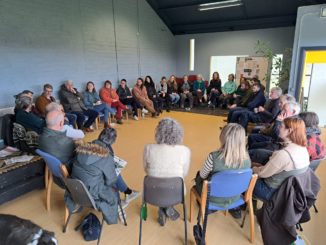
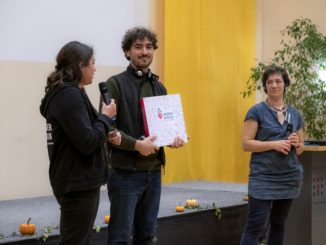
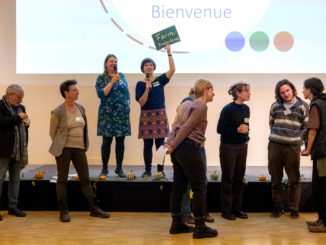
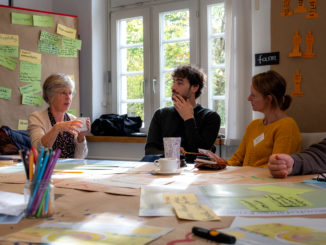
We congregated on the last weekend in November, together with participants from 12 European countries and beyond, for our Rural Resilience Gathering 2025. We took home new perspectives, tools and best practices, a richer vision of the mosaic of rural Europe – and a full tank of hope: that we can shape our agroecological future in our communities. Report by Louise Kelleher and Pauline Petit. […]

Main stories

Rural Resilience Caravan to Return to Plessé, France

On 27 – 30 November, the Rural Resilience Gathering 2025 will take place in Plessé, France, co-organised by ARC2020 and elected representatives of Plessé together with a whole host of partners active in agroecology, access to land, food sovereignty and rural justice across Europe. If you are interested in taking part in the Gathering, express your interest via the form linked in the article!  […]

Main stories

When Policy Fails, People Step Up – Inside ARC’s Rural Resilience Project

Rural Resilience is ARC2020’s strategic initiative to strengthen civil society’s role in shaping the future of rural Europe. In a moment of democratic fragility, land inequality, and ecological breakdown, we’re working with partners across the continent who fill the gaps left by failing policies — to imagine, together, what rural transformation can look like from the ground up. Coordinator Ashley Parsons presents the project. […]

Latest from key partners

European Rural Parliament 2025 — Rural Community Solutions to Global Challenges

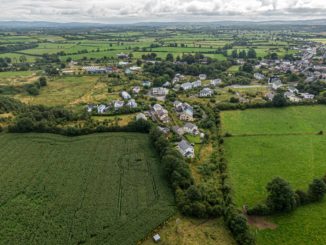
This October 20-23, over 400 rural delegates from across Europe will gather in the north-east of Scotland for the 6th European Rural Parliament (ERP), a participative democratic assembly that shines a spotlight on the power of rural communities to respond to global crises. With the theme “Strength from Opportunity: Rural Community Solutions to Global Challenges”, this year’s ERP will highlight how rural and island people, places, and practices not only bear the brunt of climate, demographic, and political shifts but also offer transformative responses rooted in solidarity, sustainability, and place-based knowledge. […]

Main stories

Does EU Policy Have An Appetite For Local Food?

Across Europe, small-scale farmers are essential actors in local food provisioning, yet they face structural barriers to accessing public support. While industrial agriculture continues to receive the lion’s share of EU subsidies, the scaffolding meant to support local food systems often proves patchy or inaccessible. What EU policy supports are there for smaller farmers to supply food locally? Oliver Moore and Ashley Parsons chew over the options. […]