Letter From The Farm | Neighbours, Not Numbers: How Local Feeds Us All
In a farming system that demands more than it gives, Marie Halicki finds that relationships, not yields, nourish resilience, sovereignty, and sanity. […]
Organic farming has long been hailed as the poster child for sustainable agriculture. But as the EU organic sector becomes increasingly industrialised, cracks are beginning to appear. How can we weed out the weaknesses in the current model and transition to diversified, resilient systems? Seeds4All visited the Bergerie de Villarceaux, a pioneering farm through the decades, in the hope of gleaning lessons from the past for the organic farmers of tomorrow. By Adèle Pautrat and Natasha Foote. […]
At first glance, the Nantaise cow is a relic of the past. A small, sturdy breed once common in western France, it had all but disappeared by the late 20th century. Today, thanks to a growing network of farmers and chefs, the little cow is making a quiet but powerful comeback—proving that small-scale, local production can be a serious and viable alternative to industrial farming. […]
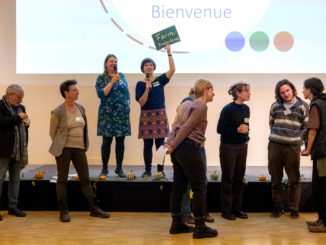
France has more than enough land to feed its inhabitants. Yet almost half of French farmland serves the global export trade. Food sovereignty will remain a pipe dream as long as the absurd globalised food system continues to hold sway, says a new report by Terre de Liens. The Rural Resilience project reports from the launch event in Paris. […]
We invite you to retrace with us the Rural Resilience project journey in 2024. Together we look back on a year that took us from rage and rollbacks to a European triangle of rural action. […]
Geopolitics, geography and geometry can sometimes come together as a force for good. A gathering of people from European rural and urban civil society in the Polish village of Grzybów was one such moment. The event, which was spearheaded by ARC2020 and took place at the end of November, weaved together rural, urban, farming and EU perspectives to find a common thread towards a fairer, more sustainable farming and food system. […]
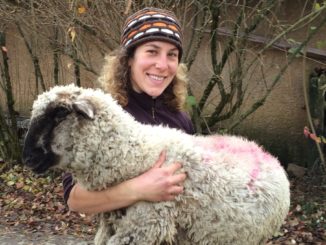
Marie Halicki, a newly established farmer in the French Alps shares with ARC2020 her fight against the BTV in 2024. […]
On 28 November – 1 December, in the rural village of Grzybów, Poland, ARC2020 is co-organising a European gathering of sustainable rural initiatives to take stock of a new political situation of Europe and to look into possibilities of cooperation: “Weaving Common Ground” between rural and urban people. In collaboration with our local hosts, the Ecological Folk High School and Ziarno association, the gathering will conclude a three-year cooperation of people in rural France, Germany and Poland. […]
France’s territorial food programmes are an exciting example of what can happen when local communities have a say in their food systems. An open letter signed by a collective of more than 120 French mayors and local councillors of all political stripes, 19 organisations and 7 scientists, and published on Friday in Le Monde, calls for a systemic vision and state support to local authorities who are working to advance the agroecological transition and transform local food systems. […]
Local communities in rural and urban areas can be powerful changemakers when it comes to food system transformation, even when national and EU policies fall way short. At Feeding Ourselves 2024, a roundtable on Bottom-Up Approaches to Sustainable Food Systems brought together actors engaged in the development of fair & ecological food systems in Germany, France and Ireland. ARC2020 was joined by Ann-Marie Weber of kollektiv von MORGEN (DE), Henrik Maas of the Arbeitsgemeinschaft bäuerliche Landwirtschaft (DE), Thierry Lohr, elected representative in the Municipality of Plessé (FR), and Fergal Anderson of Talamh Beo (IE). […]
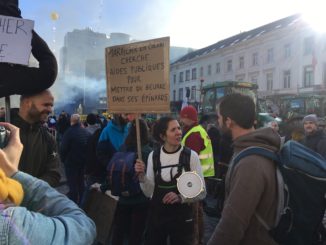
Jean-Marc Desfilhes and Hannes Lorenzen present a history of French farmers’ associations and social alliances in light of the recent demonstrations and associated political reactions. They propose: Now is the time to mobilise love and protest to stop the current agricultural policy rollback. […]
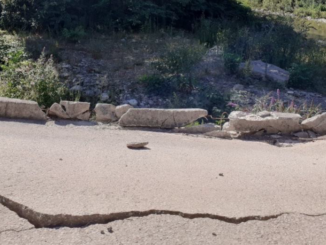
The issue of water shortages underscores the urgent need to make a success of agroecological transition. It is the dominant agricultural model that must change. Comparing the state of play in Germany and France, this is the final installment of a three-part policy analysis for the Rural Resilience project by Marie-Lise Breure-Montagne. […]
Agroecology favours the resilience of agricultural systems. Yet it is being embraced to varying extents by France, Germany and other Member States. Sustainable water management at territorial level is key, as shown by this comparison of approaches in France and Germany. Second in a three-part policy analysis for the Rural Resilience project by Marie-Lise Breure-Montagne. […]
New Genomic Techniques do not hold water. Their false promise is inconsistent with territorial and sustainable water management, finds this policy analysis by Marie-Lise Breure-Montagne for the Rural Resilience project. First in a three-part series on the topic of water, diversification and agroecology. […]
ARC2020 together with kollektiv von MORGEN and the Arbeitsgemeinschaft bauerliche Landwirtschaft presents the “Marburg Action Plan for Future-Proof Food Systems in Europe”. […]
Agricultural and Rural Convention
You are currently viewing a placeholder content from GTranslate. To access the actual content, click the button below. Please note that doing so will share data with third-party providers.
More InformationYou are currently viewing a placeholder content from amChart. To access the actual content, click the button below. Please note that doing so will share data with third-party providers.
More Information